

We define and advance data and environments to push the AI frontier
building benchmarks and collaborating with



Featured research
Vision and impact
We help labs advance frontier models by working with domain experts to design and build complex, realistic datasets that drive model performance.

Benchmarking &
Evaluation
Build benchmarks that define and advance the AI frontier

Scaling Subject Matter Expertise
Define how subject matter experts encode their knowledge into data

RL, Training, & Data Valuation
Drive dataset development based on feedback from RL and model training
Community and open science
Open benchmarks, conversations, and research for real-world AI performance.
Open Benchmarks Grants
Backed by a $3M commitment, the program funds open-source datasets, benchmarks, and evaluation artifacts that shape how frontier AI systems are built and evaluated.

Bench Talks

Reading Group
DEEP RESEARCH Expertise
Technical advisors and distinguished affiliates









Browse research blogs and academic papers

Large language models (LLMs), even when specifically trained to process long input contexts, struggle to capture relevant information located in the middle of their input. This phenomenon has been known as the lost-in-themiddle problem. In this work, we make three contributions. First, we set out to understand the factors that cause this phenomenon. In doing so, we establish a connection…

Large language models are prominently used in real-world applications, often tasked with reasoning over large volumes of documents. An exciting development in this space is models boasting extended context capabilities, with some accommodating over 2 million tokens. Such long context model capabilities remain uncertain in production systems, motivating the need to benchmark their performance on real world use cases. We…

Importance: Diagnostic codes are commonly used as inputs for clinical prediction models, to create labels for prediction tasks, and to identify cohorts for multicenter network studies. However, the coverage rates of diagnostic codes and their variability across institutions are underexplored. Objective: Primary objective was to describe lab- and diagnosis-based labels for 7 selected outcomes at three institutions. Secondary objectives were…

Studies rarely use real patient care data for LLM evaluation. Administrative tasks such as generating provider billing codes and writing prescriptions are understudied. Natural Language Processing (NLP)/Natural Language Understanding (NLU) tasks like summarization, conversational dialogue, and translation are infrequently explored. Accuracy is the predominant dimension of evaluation, while fairness, bias and toxicity assessments are neglected. Evaluations in specialized fields, such…
Background: Foundation models hold promise for transforming artificial intelligence (AI) in healthcare by providing modular components that are easily adaptable to downstream healthcare tasks, making AI development more scalable and cost-effective. Foundation models for structured electronic health records (EHR), trained on coded medical records from millions of patients, demonstrated benefits including increased performance with fewer training labels, and improved robustness…

We propose a new strategy for applying large pre-trained language models to novel tasks when labeled training data is limited. Rather than apply the model in a typical zero-shot or few-shot fashion, we treat the model as the basis for labeling functions in a weak supervision framework. To create a classifier, we first prompt the model to answer multiple distinct…
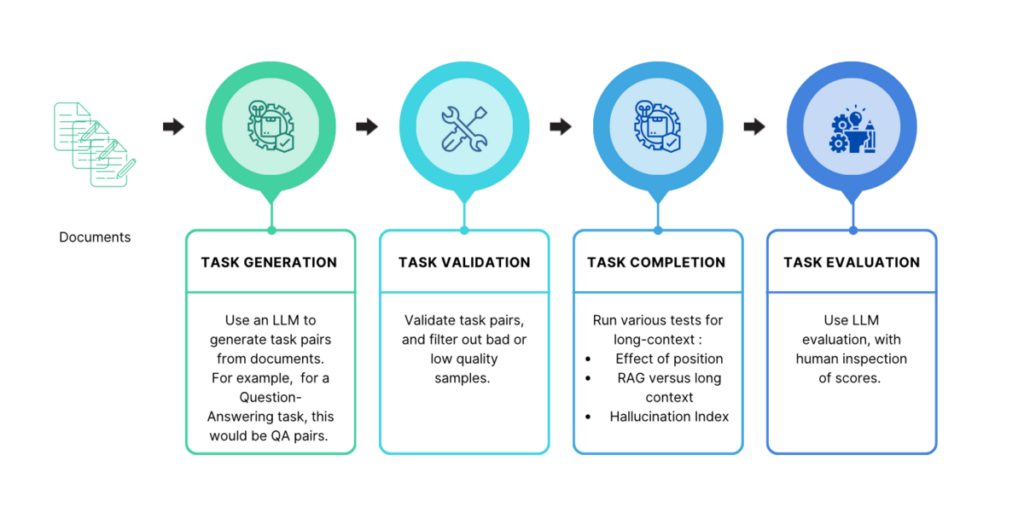
Snorkel researchers devised a new way to evaluate long context models and address their “lost-in-the-middle” challenges with mediod voting.

ROBOSHOT acts like a lens on foundation models and improves their zero-shot performance without additional fine-tuning.