

We define and advance data and environments to push the AI frontier
building benchmarks and collaborating with



Featured research
Vision and impact
We help labs advance frontier models by working with domain experts to design and build complex, realistic datasets that drive model performance.

Benchmarking &
Evaluation
Build benchmarks that define and advance the AI frontier

Scaling Subject Matter Expertise
Define how subject matter experts encode their knowledge into data

RL, Training, & Data Valuation
Drive dataset development based on feedback from RL and model training
Community and open science
Open benchmarks, conversations, and research for real-world AI performance.
Open Benchmarks Grants
Backed by a $3M commitment, the program funds open-source datasets, benchmarks, and evaluation artifacts that shape how frontier AI systems are built and evaluated.

Bench Talks

Reading Group
DEEP RESEARCH Expertise
Technical advisors and distinguished affiliates









Browse research blogs and academic papers
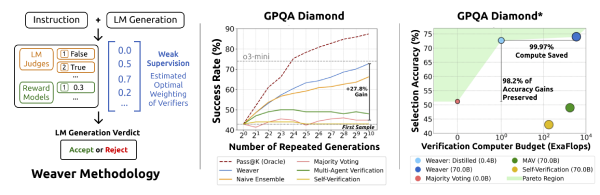
Verifiers can enhance language model (LM) performance by scoring and ranking a set of generated responses, but high-quality verifiers today are either unscalable (like human judges) or of limited practical use (such as formal proof tools like Lean). While LM-based judges and reward models serve as general-purpose verifiers, they still fall short of the performance levels achieved by oracle verifiers,…

Rubrics aren’t just for evaluation—they’re a blueprint for better data annotation. In this post, we explore how structured rubrics enable scalable, high-quality labeling and evaluation of GenAI systems. Learn how Snorkel and leading labs use rubrics to align human and automated judgment and accelerate trusted AI development.
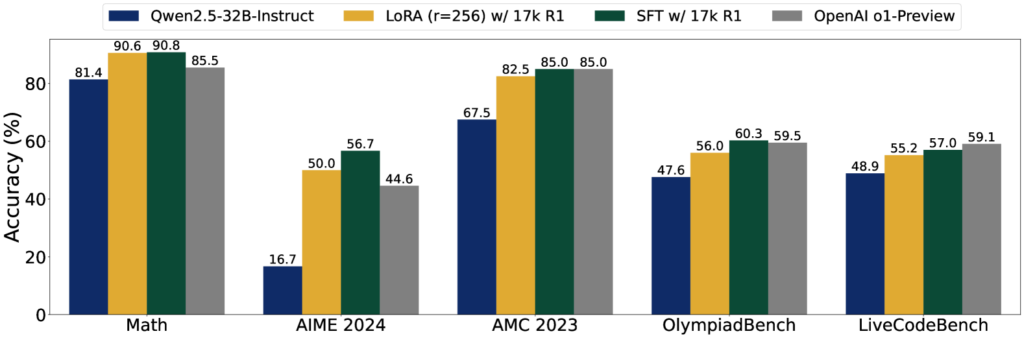
We’re taking a look at the research paper, LLMs can easily learn to reason from demonstration (Li et al., 2025), in this week’s community research spotlight. It focuses on how the structure of reasoning traces impacts distillation from models such as DeepSeek R1. What’s the big idea regarding LLM reasoning distillation? The reasoning capabilities of powerful models such as DeepSeek…

The weak-to-strong generalization phenomenon is the driver for important machine learning applications including highly data-efficient learning and, most recently, performing superalignment. While decades of research have resulted in numerous algorithms that produce strong empirical performance, understanding what aspects of data enable weak-to-strong generalization has been understudied. We propose a simple data-centric mechanism that characterizes weak-to-strong generalization: the overlap density. Intuitively,…
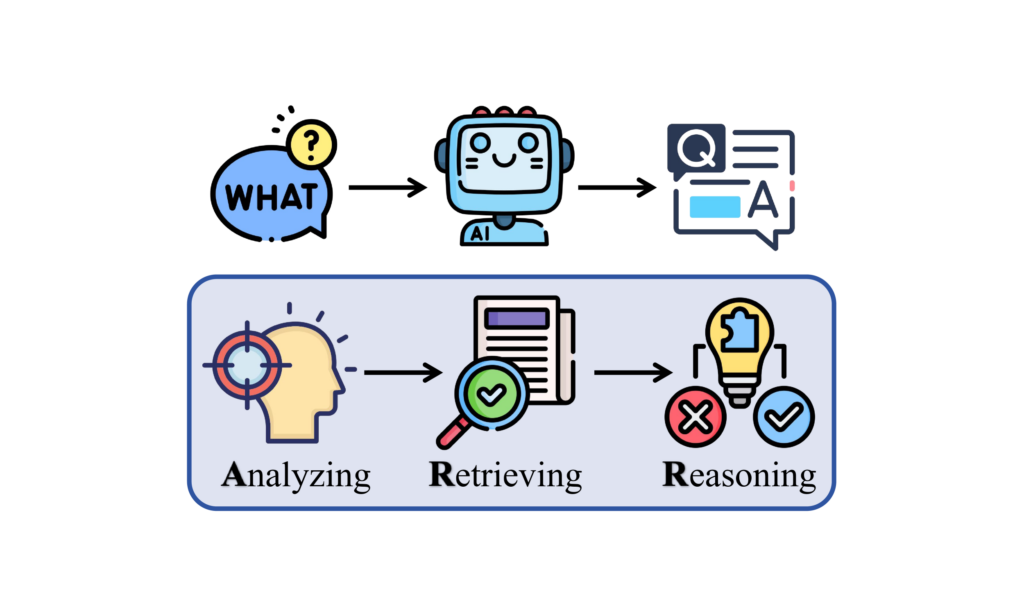
Learn how ARR improves QA accuracy in LLMs through intent analysis, retrieval, and reasoning. Is intent the key to smarter AI? Explore ARR results!
We introduce a benchmark to evaluate the capability of AI to solve problems in theoretical physics, focusing on high-energy theory and cosmology. The first iteration of our benchmark consists of 57 problems of varying difficulty, from undergraduate to research level. These problems are novel in the sense that they do not come from public problem collections. We evaluate our data…
Existing ML benchmarks lack the depth and diversity of annotations needed for evaluating models on business process management (BPM) tasks. BPM is the practice of documenting, measuring, improving, and automating enterprise workflows. However, research has focused almost exclusively on one task– full end-to-end automation using agents based on multimodal foundation models (FMs) like GPT-4. This focus on automation ignores the…

Embodiments introduce an approach to semi-automatically generate labels for data based on implementation of a clustering or language model prompting technique and can be used to implement a form of programmatic labeling to accelerate the development of classifiers and other forms of models. The disclosed methodology is particularly helpful in generating labels or annotations for unstructured data. In some embodiments,…

Objective: We sought to develop a weak supervision-based approach to demonstrate feasibility of post-market surveillance of wearable devices that render AF pre-diagnosis. Materials and Methods: Two approaches were evaluated to reduce clinical note labeling overhead for creating a training set for a classifier: one using programmatic codes, and the other using prompts to large language models (LLMs). Probabilistically labeled notes…