

author
Chief Scientist
,
Snorkel AI
Assistant Professor @ University of Wisconsin-Madison
Frederic Sala is Chief Scientist at Snorkel AI and an assistant professor in the Computer Sciences Department at the University of Wisconsin-Madison. His research studies the fundamentals of data-driven systems and machine learning, with a focus on foundation models, automated machine learning, learning with limited data. Previously, he was a postdoctoral researcher at Stanford. He received his Ph.D. in electrical engineering from UCLA.
The latest from Fred
Blog
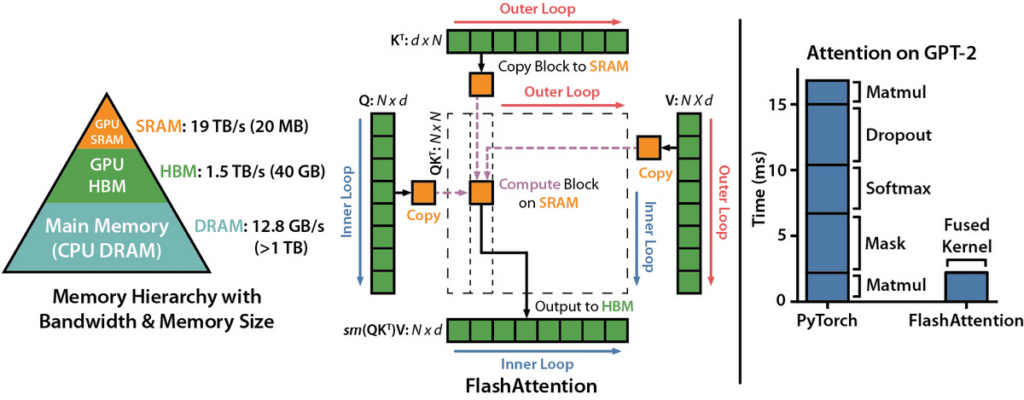
The future of large language models is faster and more robust
Snorkel and affiliated academic labs have been hard at work reducing how computationally expensive large language models are.
Anomaly Detection with Multiple Reference Datasets
This paper proposes generalizations of CWOLA and SALAD, which exploit multiple reference datasets to improve performance in resonant anomaly detection, and provides finite-sample guarantees to go beyond existing asymptotic analyses.
Research Paper
Anomaly Detection with Multiple Reference Datasets
This paper proposes generalizations of CWOLA and SALAD, which exploit multiple reference datasets to improve performance in resonant anomaly detection, and provides finite-sample guarantees to go beyond existing asymptotic analyses.

Ask Me Anything: A simple strategy for prompting language models.
This paper proposes "Ask Me Anything" (AMA), a prompting method that uses weak supervision to combine noisy predictions from multiple prompts generated from an LLM, resulting in an average 10.2% performance lift over the few-shot baseline across a variety of different open-source models.
Research Paper
Ask Me Anything: A simple strategy for prompting language models.
This paper proposes “Ask Me Anything” (AMA), a prompting method that uses weak supervision to combine noisy predictions from multiple prompts generated from an LLM, resulting in an average 10.2% performance lift over the few-shot baseline across a variety of different open-source models.
AutoWS-Bench-101: Benchmarking Automated Weak Supervision with 100 Labels
AutoWS-Bench-101 is a framework for evaluating automated weak supervision techniques compared to other baseline methods such as zero-shot foundation models and supervised learning, in order to help practitioners choose the best method to generate additional labels.
Research Paper
AutoWS-Bench-101: Benchmarking Automated Weak Supervision with 100 Labels
AutoWS-Bench-101 is a framework for evaluating automated weak supervision techniques compared to other baseline methods such as zero-shot foundation models and supervised learning, in order to help practitioners choose the best method to generate additional labels.
Lifting Weak Supervision To Structured Prediction
This paper finds that weak supervision can be used beyond classification applications, including rankings, graphs, and manifolds, and can provide generalization guarantees nearly identical to models trained on clean data.
Research Paper
Lifting Weak Supervision To Structured Prediction
This paper finds that weak supervision can be used beyond classification applications, including rankings, graphs, and manifolds, and can provide generalization guarantees nearly identical to models trained on clean data.

Generative Modeling Helps Weak Supervision (and Vice Versa)
This work proposes and theoretically justifies a model that fuses weak supervision and generative adversarial networks to improve the estimate of unobserved labels and data augmentation, outperforming baseline weak supervision models on multiclass image classification datasets.
Research Paper
Generative Modeling Helps Weak Supervision (and Vice Versa)
This work proposes and theoretically justifies a model that fuses weak supervision and generative adversarial networks to improve the estimate of unobserved labels and data augmentation, outperforming baseline weak supervision models on multiclass image classification datasets.

Shoring Up the Foundations: Fusing Model Embeddings and Weak Supervision
Liger, a combination of foundation models and weak supervision frameworks, improves existing weak supervision techniques by partitioning the embedding space and extending source votes in embedding space, resulting in improved performance on six benchmark NLP and video tasks.
Research Paper
Shoring Up the Foundations: Fusing Model Embeddings and Weak Supervision
Liger, a combination of foundation models and weak supervision frameworks, improves existing weak supervision techniques by partitioning the embedding space and extending source votes in embedding space, resulting in improved performance on six benchmark NLP and video tasks.
Blog
Auto LF generation: Lots of little models, big benefits
Constructing labeling functions (LFs) is at the heart of using weak supervision. We often think of these labeling functions as programmatic expressions of domain expertise or heuristics. Indeed, much of the advantage of weak supervision is that we can save time—writing labeling functions and applying them to data at scale is much more efficient compared to hand-labeling huge numbers of…
Universalizing Weak Supervision
This paper proposes a universal technique that enables weak supervision over any label type while still offering desirable properties, including practical flexibility, computational efficiency, and theoretical guarantees.
Research Paper
Universalizing Weak Supervision
This paper proposes a universal technique that enables weak supervision over any label type while still offering desirable properties, including practical flexibility, computational efficiency, and theoretical guarantees.