

Snorkel AI will hold a free Foundation Model Virtual Summit on Tuesday, January 17 where speakers from across the technology industry, including some from Google and Stanford University, will discuss the enterprise use of Foundation Models.
Registration is now open for the summit, which will begin at 9 AM Pacific Time with an optional in-person portion at Snorkel HQ in Redwood City, CA, to follow from 4 PM to 6 PM.

From GPT-3 to DALL-E 2 and Stable Diffusion, foundation models are driving the rapid advancement of AI, enabling exciting new possibilities for creativity and exploration while pushing the boundaries of what’s possible.
However, using these foundation models in real-world, high-value scenarios can be challenging due to their lack of adaptability to complex, domain-specific tasks as well as their potential cost and governance constraints.
The summit’s presentations will cover best practices for using and deploying Foundation Models for enterprise AI, common challenges faced when adopting foundation models (and how to overcome them), the Foundation Models available today and how they can be applied to ML tasks, and the future of foundation models.
Current list of talks:
- Alex Ratner, CEO and co-founder at Snorkel AI will deliver the opening keynote address.
- Ali Arsanjani, director cloud partner engineering at Google, will address the challenges and ethics of businesses adopting dynamic learning maps and large language models.
- Amanpreet Singh, research team lead at Hugging Face, will focus on unified foundational models for vision and language alignment.
- Ananya Kumar, ML researcher at Stanford University, will give a tutorial on foundation models and fine-tuning.
- Braden Hancock, Co-founder and head of research at Snorkel AI, will demonstrate how to transfer knowledge from foundation models into deployable models.
- Carlo Giovine and David Harvey, Partner and Expert at McKinsey QuantumBlack, respectively, will trace trends in enterprise machine learning and the potential impact of Foundation Models
- Jay Alammar, director and engineering fellow at Cohere, will talk to the subject of when generative AI is not enough.
- Jimmy Lin, NLP product lead at Sambanova Systems, will describe a practical approach to delivering enterprise value with foundation models.
- Joe Penna, Head of Entertainment Technology at Stability AI will give a talk entitled “The Ethical Implications of Building A Real-Life Skynet”
- Simran Arora, ML researcher at Stanford University, will discuss how Ask Me Anything-style questions can bolster the effectiveness of Foundation Models.
Most talks will be presented live with a Q&A session to immediately follow.
The in-person meetup from 4-6 PM at Snorkel HQ will offer an opportunity to network with fellow Bay Area data scientists and meet Snorkel’s co-founders and members of the team.
The Foundation Model Virtual Summit follows up on Snorkel’s Future of Data-centric AI event in August 2022, which drew more than 5000 registrants and featured more than 50 sessions and 70 speakers.

Recommended articles
View all articles
Grok 4.7 on Senior SWE-Bench: Strong pass@3, Cheaper Cost per Trial
Grok 4.7 was evaluated on Senior SWE-Bench, our benchmark for measuring whether coding agents work like senior engineers. It reaches a tasteful pass@3 of 40.0%, up from 38.9% for Grok 4.6, ranking sixth overall at $0.24 per trial, which is a fraction of the cost compared to Opus 4.8. Benchmark Senior SWE-Bench evaluates agents as compared to a senior engineer.
September 21, 2026
•
Snorkel Team
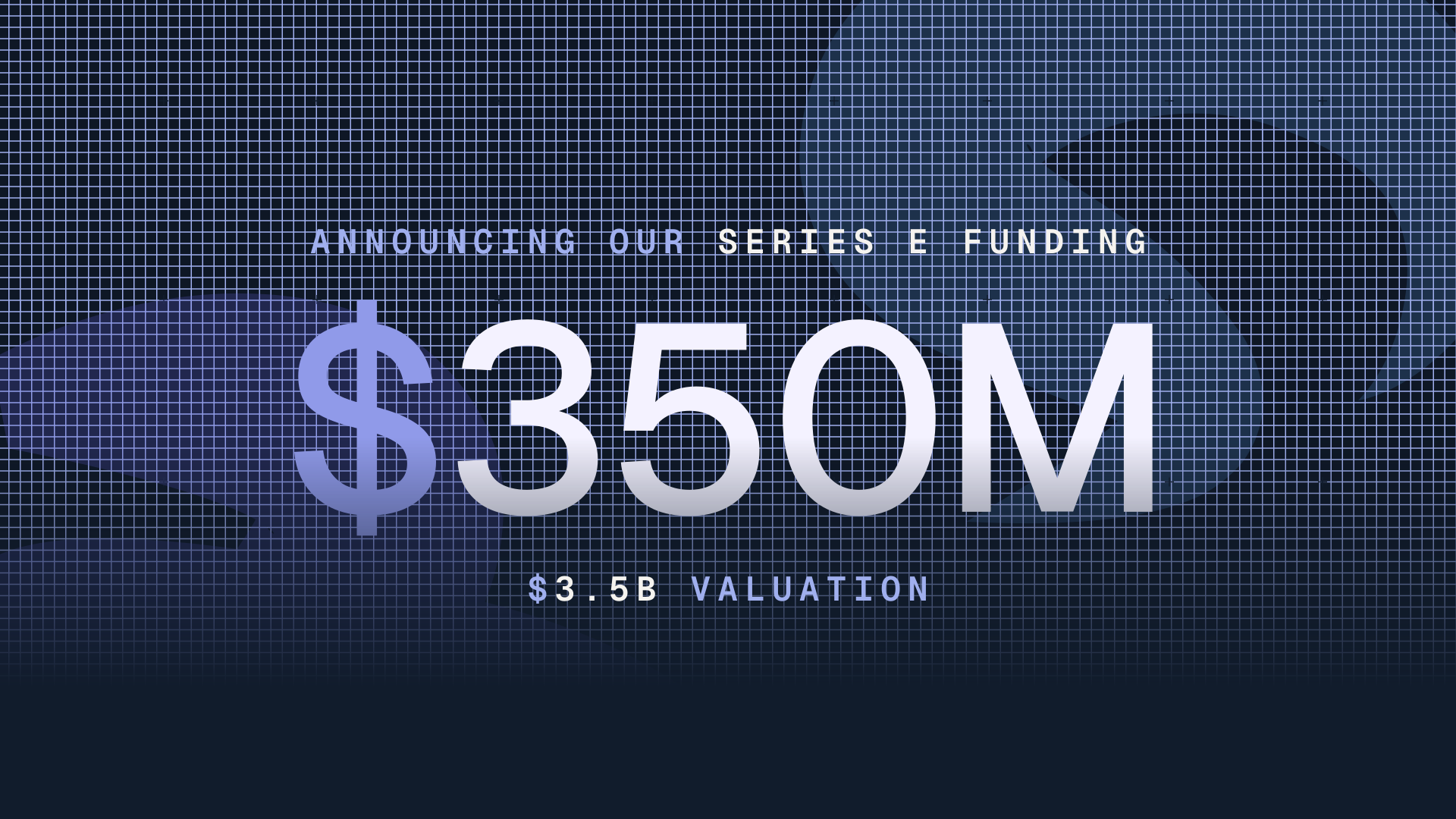
Data 2.0 and the research era of AI data
Today, I’m excited to announce Snorkel’s $350M Series E financing at a $3.5B valuation, led by Insight and S32, with participation from Third Point, March, Blumberg, Allegis, Standard VC, Frontline, and existing investors Addition, Lightspeed, Greylock, GV, P7, Wells Fargo, Walden Catalyst Ventures, and Factory.
September 20, 2026
•
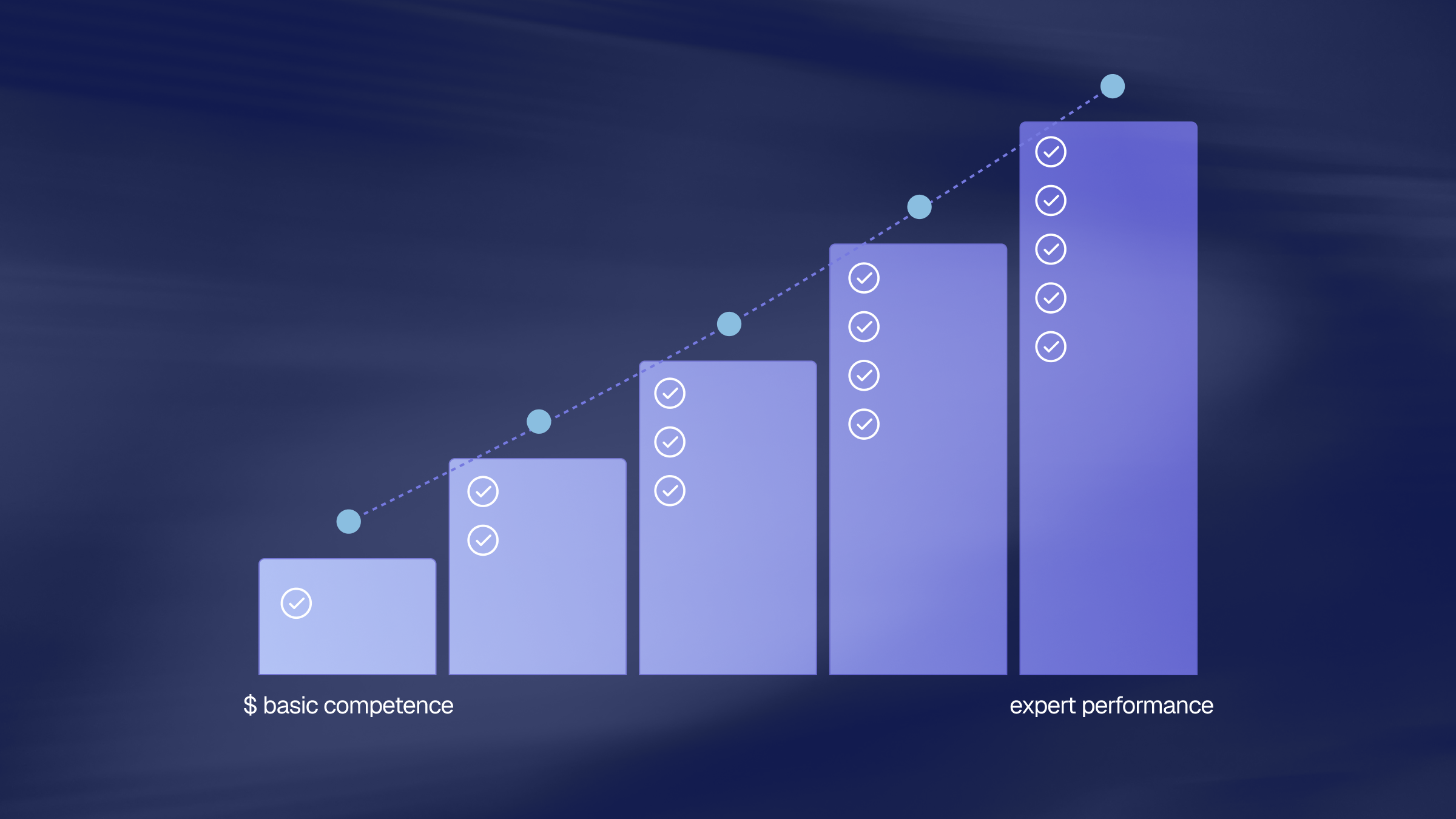
From Foundational Competency to Expert Performance: A Curriculum Approach to Model Development
A student does not go from 1st to 12th grade in a single step. Each grade builds on a specific set of skills, and each one assumes the previous skills have already been mastered. Nobody learns calculus without algebra. When a student skips ahead anyway, what they end up with is memorization rather than understanding. The gaps show up later,
September 15, 2026
•
Snorkel Team