


author
Applied Research Scientist
,
Snorkel AI
My general research interests are in machine learning, modeling richly structured graph data, and enhancing artificial intelligence systems with symbolic reasoning capabilities. I have developed models for a variety of applications, including computer vision, language modeling, social networks, demand forecasting, and recommender systems.
The latest from Charles

Blog
Checking the Rubrics: RIFT Results on Five Public Benchmarks
Rubric-based evaluation is now a common way to score the outputs of language models and agents (Hashemi et al., 2024; Wei et al., 2025), and rubrics also serve as the source of reward signals in training (Gunjal et al., 2025; Liu et al., 2026; Ding, 2026). In both uses the rubric is the measurement instrument, and the validity of any…
Blog
The science of rubric design
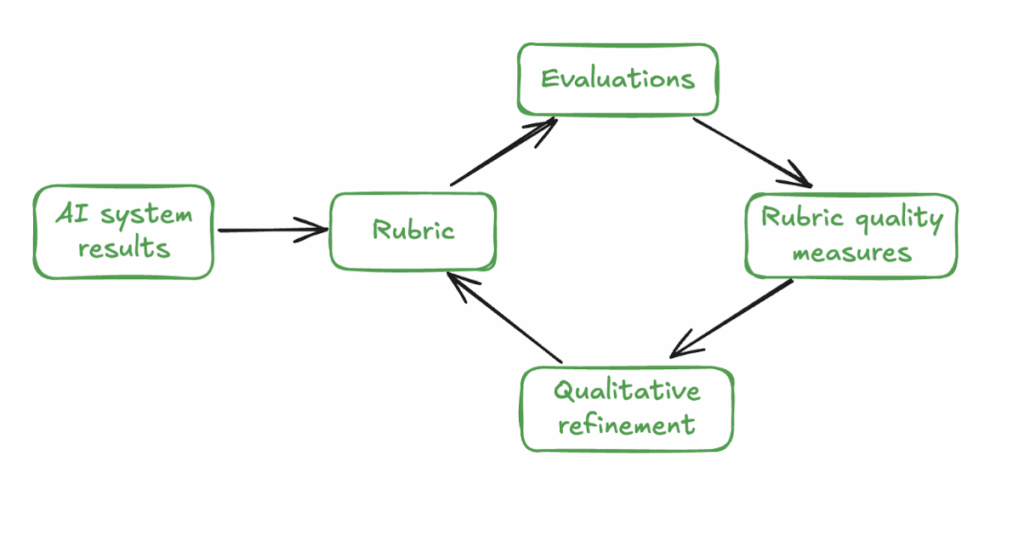
Part 3 of our rubric series explains the science of rubric design. We show why rubrics should be treated like models—structured, measured, and iterated—to maximize objective alignment and inter-rater agreement. Learn how to choose hierarchy and scale points, track agreement (IAA) and LLMAJ alignment, and refine with domain experts, with examples like PaperBench and HealthBench.