

Vincent Sunn Chen spoke at AI Engineer London about what it actually takes to build benchmarks that move the field forward, not just measure it.
The throughline is an asymmetry that keeps showing up across deployments and the 150+ proposals reviewed for the Open Benchmarks Grants: agent capabilities are climbing fast, but the ability to measure those agents in realistic, high-stakes settings has lagged behind. Closing that evaluation gap is one of the most important problems in AI right now — and open benchmarks are one of the most powerful levers available to address it.
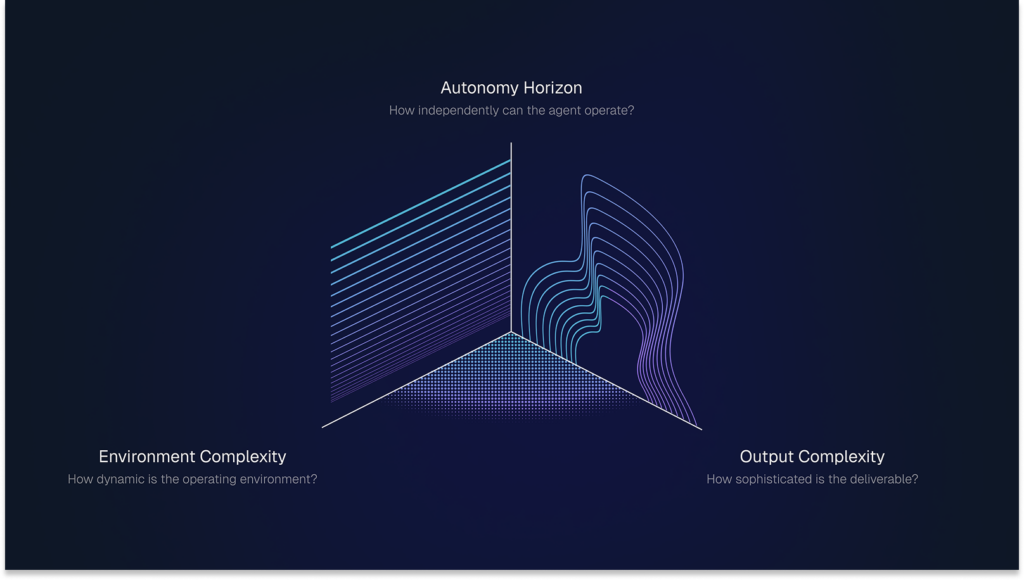
In the talk, Vincent breaks the problem into two halves. The first is the science of an effective measuring stick — rigorous task quality, deliberate distributional diversity, real model headroom, and a robust evaluation methodology — illustrated with benchmarks like GPQA, MMLU, ARC-AGI, and τ-bench. The second is the art that separates benchmarks that merely measure from the ones that reshape the field: a clear thesis on where things are going, a roadmap others can build on, and first-class researcher UX — think Terminal-Bench, SWE-bench, and HELM. The talk closes with a look at where the next great benchmarks may emerge: environment complexity, autonomy horizon, and output complexity.
If you want to go deeper than the talk, the two pieces below are the fuller written versions:
- For the framework: what makes a benchmark a useful measuring stick, and what makes one shape the frontier (Benchmarks should shape the frontier, not just measure it).
- For the forward-looking view: the three axes where tomorrow’s benchmarks need to push hardest (Closing the Evaluation Gap in Agentic AI).
And if any of this maps to what you’re building, the Open Benchmarks Grants are open: a $3M commitment to fund open benchmarks, datasets, and evaluation artifacts for frontier agents. Share a proposal or reach out at benchmarks.snorkel.ai.
Recommended articles
View all articles
Grok 4.7 on Senior SWE-Bench: Strong pass@3, Cheaper Cost per Trial
Grok 4.7 was evaluated on Senior SWE-Bench, our benchmark for measuring whether coding agents work like senior engineers. It reaches a tasteful pass@3 of 40.0%, up from 38.9% for Grok 4.6, ranking sixth overall at $0.24 per trial, which is a fraction of the cost compared to Opus 4.8. Benchmark Senior SWE-Bench evaluates agents as compared to a senior engineer.
September 21, 2026
•
Snorkel Team
Data 2.0 and the research era of AI data
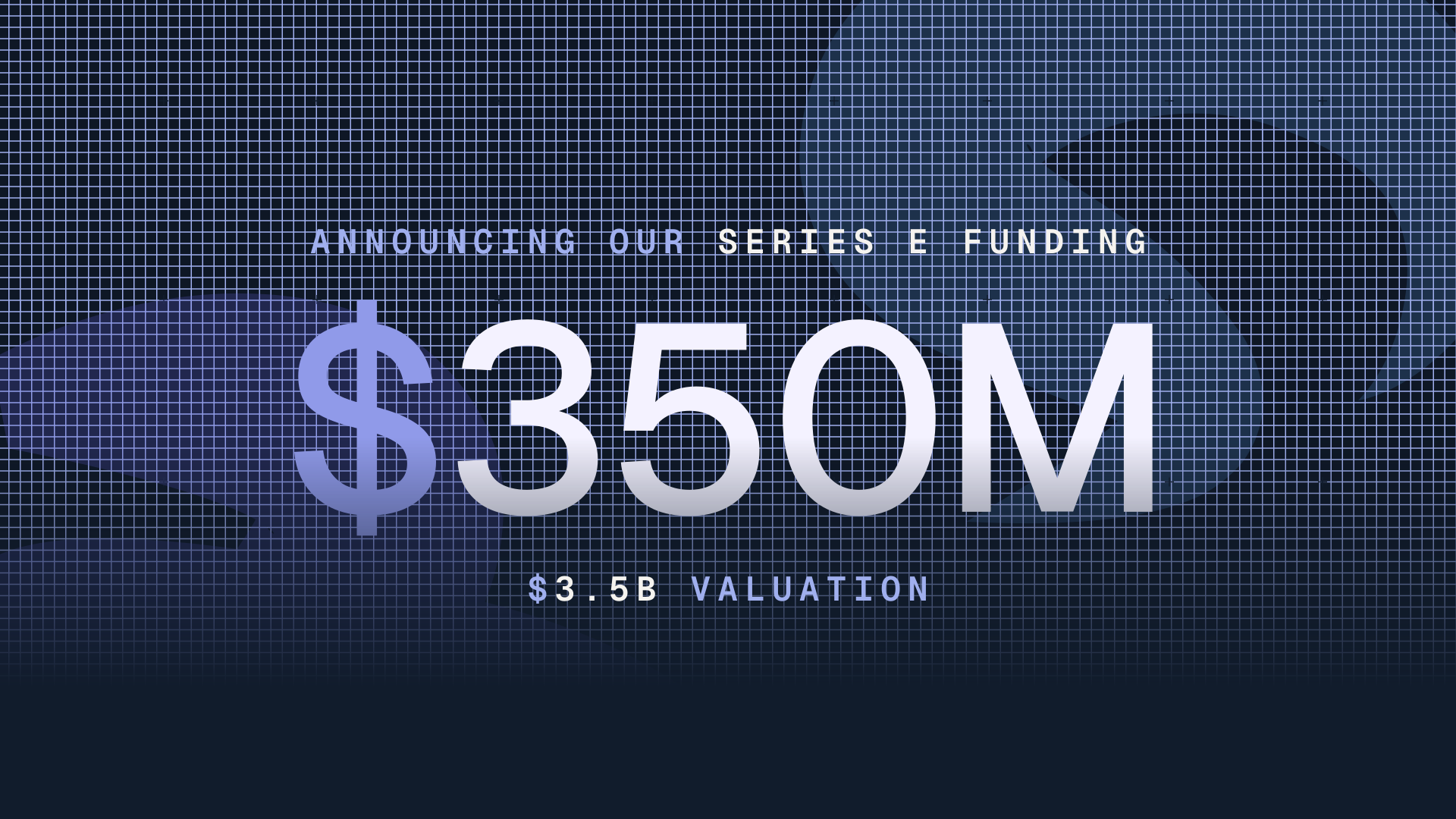
Today, I’m excited to announce Snorkel’s $350M Series E financing at a $3.5B valuation, led by Insight and S32, with participation from Third Point, March, Blumberg, Allegis, Standard VC, Frontline, and existing investors Addition, Lightspeed, Greylock, GV, P7, Wells Fargo, Walden Catalyst Ventures, and Factory.
September 20, 2026
•
From Foundational Competency to Expert Performance: A Curriculum Approach to Model Development
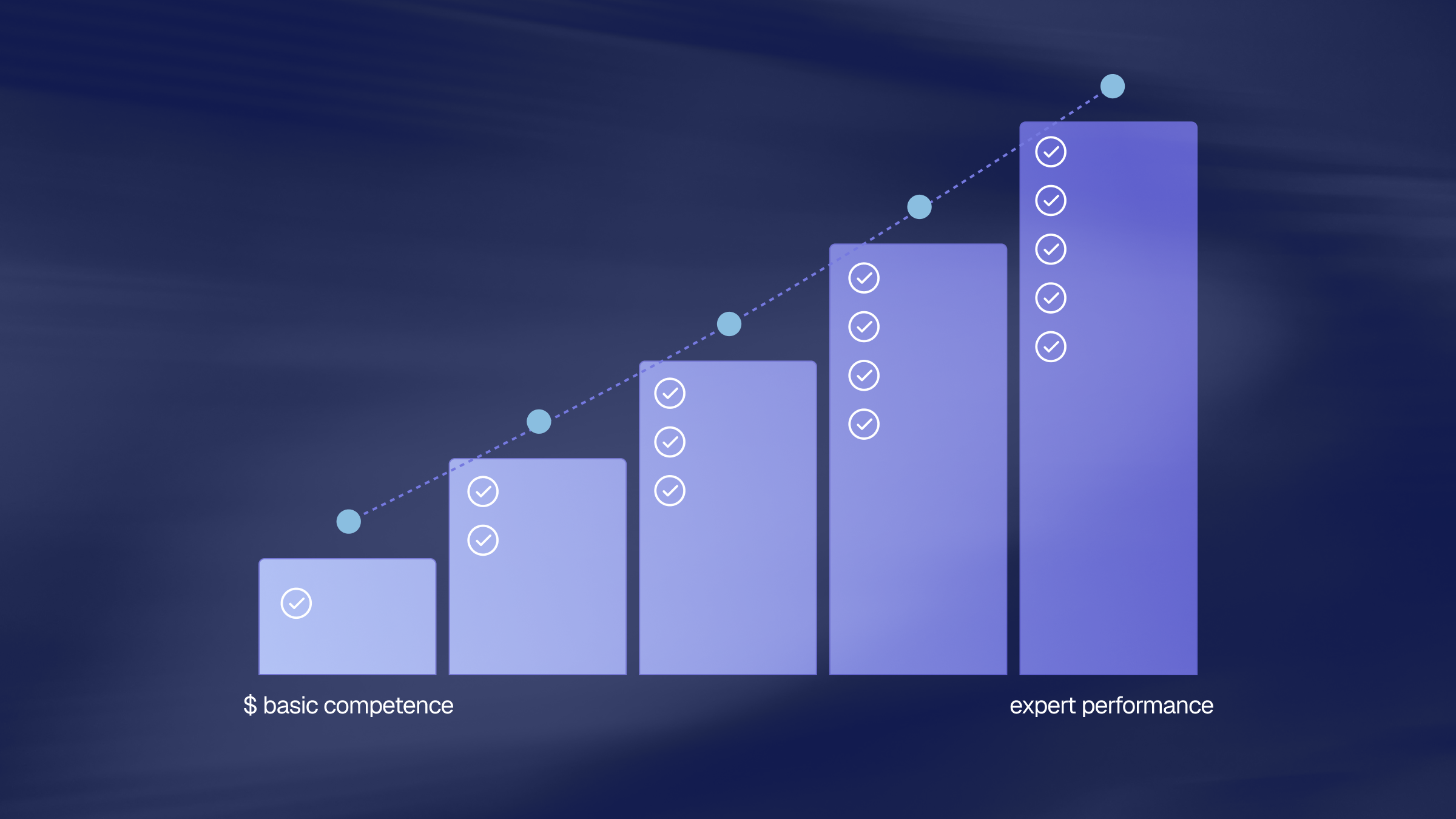
A student does not go from 1st to 12th grade in a single step. Each grade builds on a specific set of skills, and each one assumes the previous skills have already been mastered. Nobody learns calculus without algebra. When a student skips ahead anyway, what they end up with is memorization rather than understanding. The gaps show up later,
September 15, 2026
•
Snorkel Team