

The adoption of trustworthy AI and its successful integration into our country’s most critical systems is paramount to achieving the goal of employing AI applications to accelerate economic prosperity and national security. However, traditional approaches to developing AI applications suffer from a critical flaw that leads to significant ethics and governance concerns. Specifically, AI today relies on massive, hand-labeled training datasets and/or black-box “pre-trained” models that are effectively ungovernable and unauditable.
The need for trustworthy AI
Snorkel AI supports customers in highly-regulated industries such as finance, healthcare, government, and others. These industries are adapting to new AI ethics standards which require explaining and justifying how AI/ML systems are designed and/or how they produce a given result.
New methodologies are being developed to ensure trustworthy AI (sometimes called Responsible AI). While models and applications built with these methodologies are not error-proof, they are designed to be explainable, auditable, and governable.
Snorkel AI’s trustworthy AI advantage
In order to build Trustworthy AI frameworks institutions face five key requirements:
- Govern & audit the data that AI learns from
- Explain AI decisions & errors
- Correct biases in AI systematically
- Allow feedback between labeling & training
- Ensure supply chain integrity for AI/ML
In this series of articles, published over the coming weeks, we will describe each of these requirements in detail and demonstrate:
- How traditional approaches to developing AI applications based on hand-labeled ML training data are key blockers to these requirements for governable, ethical AI.
- How methodologies developed to mitigate these blockers continue to have shortcomings and fall short of the goal.
- How Snorkel Flow, with its core capability to programmatically label and manage training data, instead of by hand, overcomes these challenges.

Don’t miss the opportunity to explore approaches to help our government agencies effectively and efficiently leverage Trustworthy AI. Join us at this insightful online event bringing experts on the federal and defense lines on April 21, 2022, at 12:00 ET.
Trustworthy AI: Governance and auditability
In order to achieve Trustworthy AI, an organization must have visibility into several aspects of the training data, including understanding how it was created and labeled, along with having a mechanism for monitoring and analyzing its use. In other words, they must govern & audit the data that the AI learns from.
Challenge: Auditing hand-labeled training data
If a dataset is labeled by hand, the only way to check the assigned labels for policy compliance or bias is to review it by hand. A full review could require point-by-point manual inspection of hundreds of thousands, or even millions, of individual records.
Snorkel Flow advantage
Labeled training data is the key component to building AI/ML applications. Programmatic labeling allows you to actually govern and audit this data effectively.
Snorkel’s use of labeling functions, which capture the user-defined rationale behind the data labeling process (expressible as both formal business logic or Python code), allows you to govern and audit training data the same way you’d govern and audit software code.

All labeling functions compile to easily exportable and human-readable Python Code
Each step of the process of building an AI application in Snorkel Flow – the labeling functions, the programmatically-labeled datasets, the trained ML models, and more – is also subject to version control to enable transparency, analysis, and reproducibility of the entire development lifecycle.
Snorkel AI has been successful in delivering products and results to multiple federal government partners. To speak with our federal team about how Snorkel AI can support your efforts at understanding and developing trustworthy and responsible AI applications, contact federal@snorkel.ai.

Recommended articles
View all articles
Grok 4.7 on Senior SWE-Bench: Strong pass@3, Cheaper Cost per Trial
Grok 4.7 was evaluated on Senior SWE-Bench, our benchmark for measuring whether coding agents work like senior engineers. It reaches a tasteful pass@3 of 40.0%, up from 38.9% for Grok 4.6, ranking sixth overall at $0.24 per trial, which is a fraction of the cost compared to Opus 4.8. Benchmark Senior SWE-Bench evaluates agents as compared to a senior engineer.
September 21, 2026
•
Snorkel Team
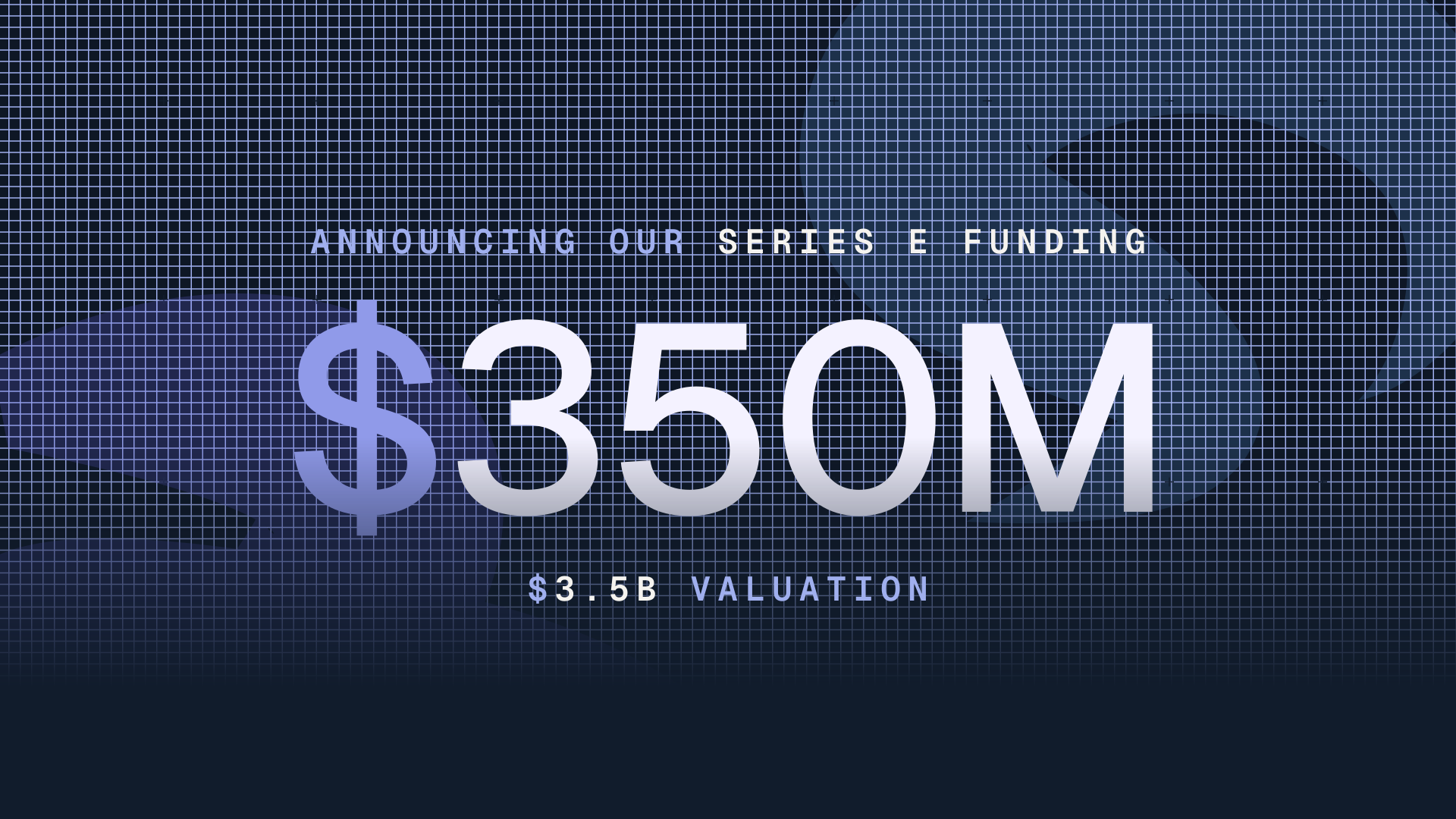
Data 2.0 and the research era of AI data
Today, I’m excited to announce Snorkel’s $350M Series E financing at a $3.5B valuation, led by Insight and S32, with participation from Third Point, March, Blumberg, Allegis, Standard VC, Frontline, and existing investors Addition, Lightspeed, Greylock, GV, P7, Wells Fargo, Walden Catalyst Ventures, and Factory.
September 20, 2026
•
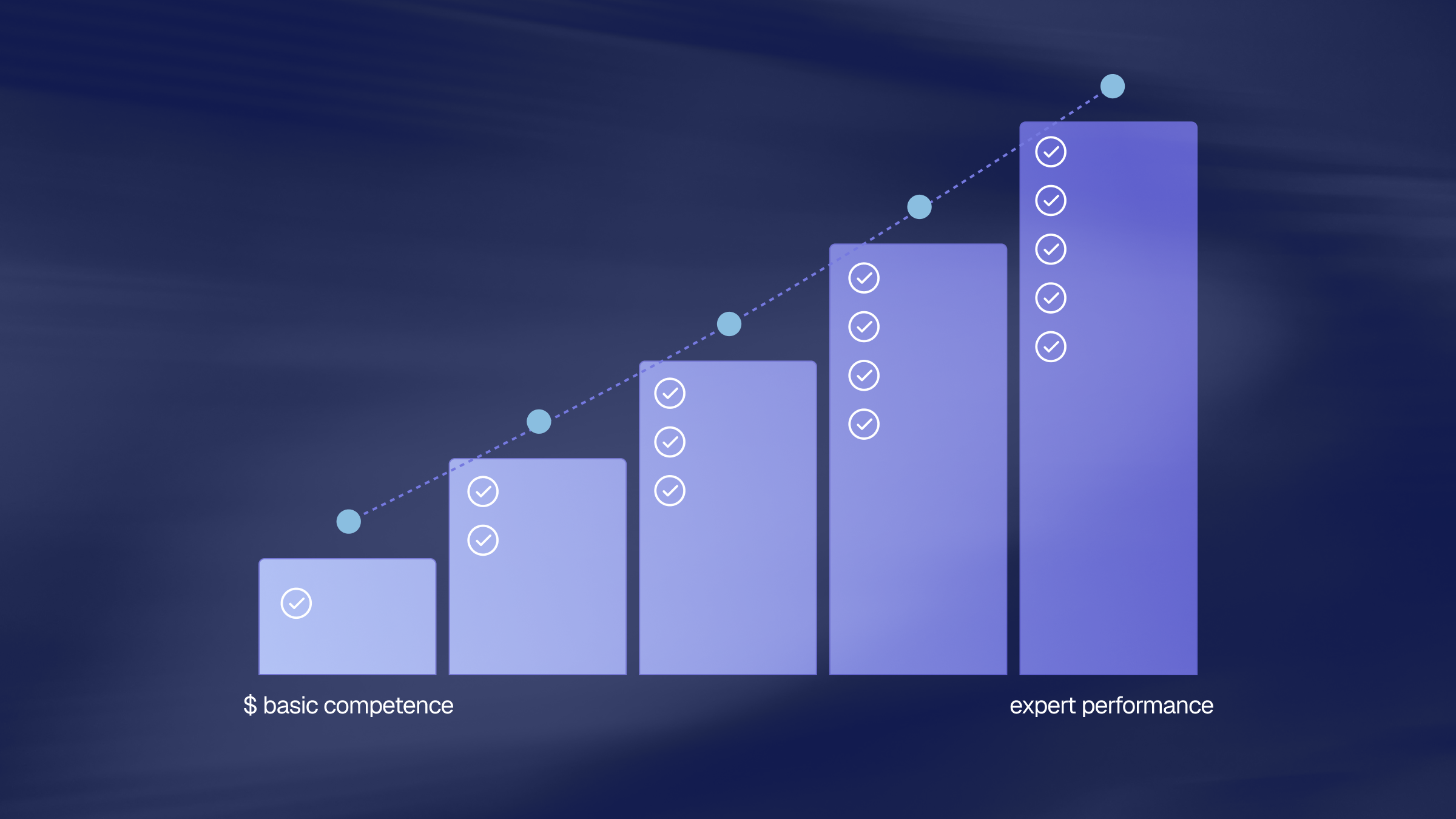
From Foundational Competency to Expert Performance: A Curriculum Approach to Model Development
A student does not go from 1st to 12th grade in a single step. Each grade builds on a specific set of skills, and each one assumes the previous skills have already been mastered. Nobody learns calculus without algebra. When a student skips ahead anyway, what they end up with is memorization rather than understanding. The gaps show up later,
September 15, 2026
•
Snorkel Team