

Last month Snorkel AI highlighted how we’re deepening our partnership with Microsoft Azure AI to help enterprises and government agencies solve their most impactful problems. One example of how Snorkel AI helps organizations leverage Azure AI services for proprietary data and custom objectives is the new Snorkel Flow integration for Microsoft Azure Form Recognizer (currently in private preview).
Azure Form Recognizer is an AI service that provides pre-built and customizable models for analyzing forms and PDFs. In addition to pre-built models supporting standard forms like W-2s, invoices, receipts, business cards, etc., Form Recognizer includes custom training support to fine-tune its powerful neural document models and support proprietary datasets, non-standard formats, and custom objectives.
Check out this demo to see how Snorkel Flow can be used to easily and quickly train Azure Form Recognizer custom models. In this demo, we showcase the integration with a real-world use case from real estate and construction. Companies in this space manage massive volumes of forms and contracts with high variability depending on the year or specific process being followed. Without Snorkel Flow, it would require significant manual effort to extract specific key dollar amounts (such as the original contract amount, the current contract amount, and any contract value modifications included in the document) from a large data set of real estate and construction contracts.
The demo also shows how Snorkel Flow can be used to orchestrate document content preprocessing (including OCR, layout information, and more through Form Recognizer), kick off custom Form Recognizer training jobs directly from the UI, and auto-generate performance analyses over custom Form Recognizer models to guide your next steps.
We’re excited to continue deepening our partnership with Microsoft Azure AI to accelerate AI development for enterprises. Schedule a custom demo tailored to your use case and Azure stack with our ML experts today.

Recommended articles
View all articles
Grok 4.7 on Senior SWE-Bench: Strong pass@3, Cheaper Cost per Trial
Grok 4.7 was evaluated on Senior SWE-Bench, our benchmark for measuring whether coding agents work like senior engineers. It reaches a tasteful pass@3 of 40.0%, up from 38.9% for Grok 4.6, ranking sixth overall at $0.24 per trial, which is a fraction of the cost compared to Opus 4.8. Benchmark Senior SWE-Bench evaluates agents as compared to a senior engineer.
September 21, 2026
•
Snorkel Team
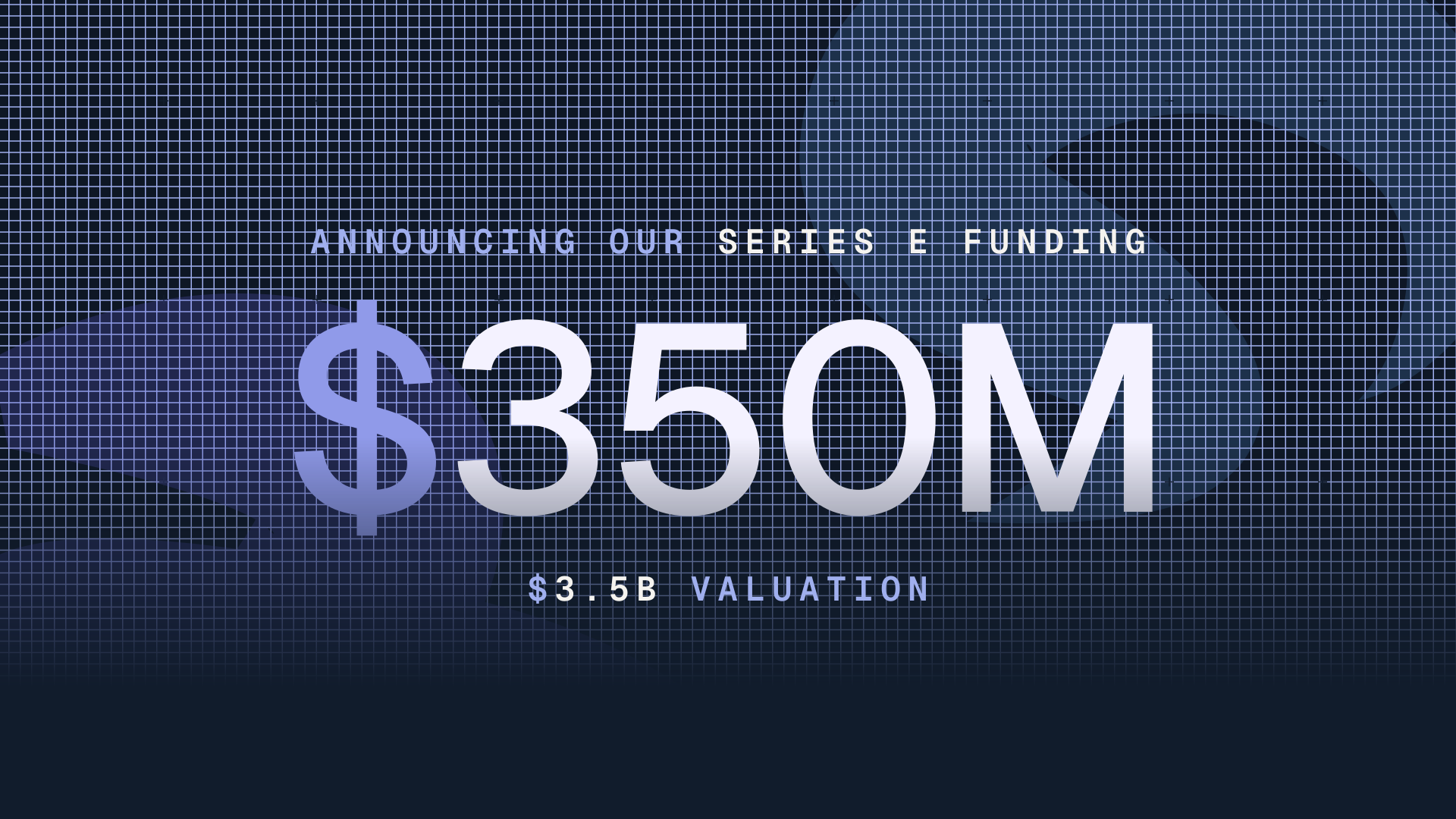
Data 2.0 and the research era of AI data
Today, I’m excited to announce Snorkel’s $350M Series E financing at a $3.5B valuation, led by Insight and S32, with participation from Third Point, March, Blumberg, Allegis, Standard VC, Frontline, and existing investors Addition, Lightspeed, Greylock, GV, P7, Wells Fargo, Walden Catalyst Ventures, and Factory.
September 20, 2026
•
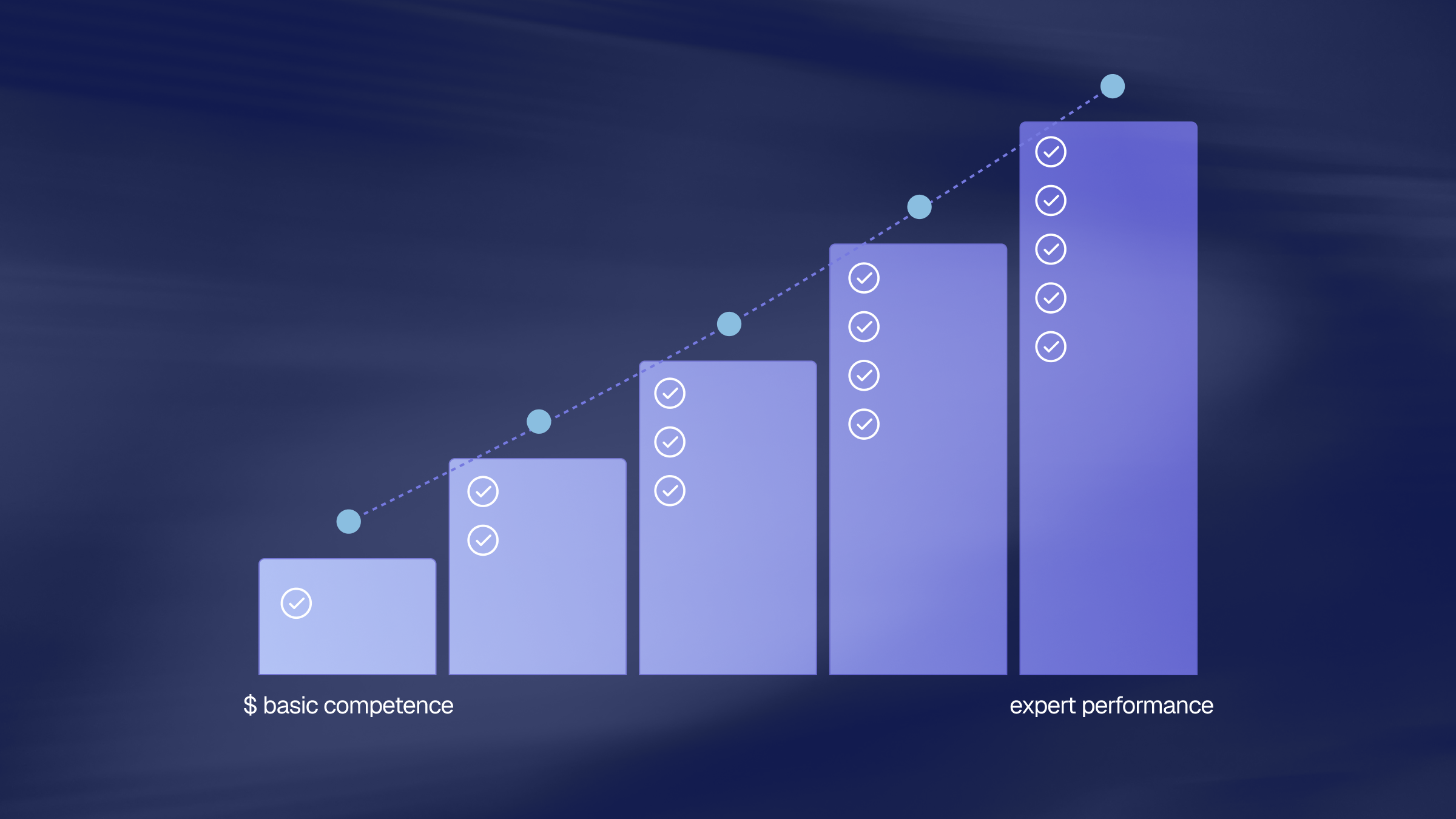
From Foundational Competency to Expert Performance: A Curriculum Approach to Model Development
A student does not go from 1st to 12th grade in a single step. Each grade builds on a specific set of skills, and each one assumes the previous skills have already been mastered. Nobody learns calculus without algebra. When a student skips ahead anyway, what they end up with is memorization rather than understanding. The gaps show up later,
September 15, 2026
•
Snorkel Team